Research
Tether Releases Open-Source AI Translation Models for African Languages
1 Sep · Africa AI Ledger Desk
Africa AI Ledger · News
The Senegal-focused language models widen access to local-language AI, while their non-commercial terms show why open weights and fully open systems are not identical.
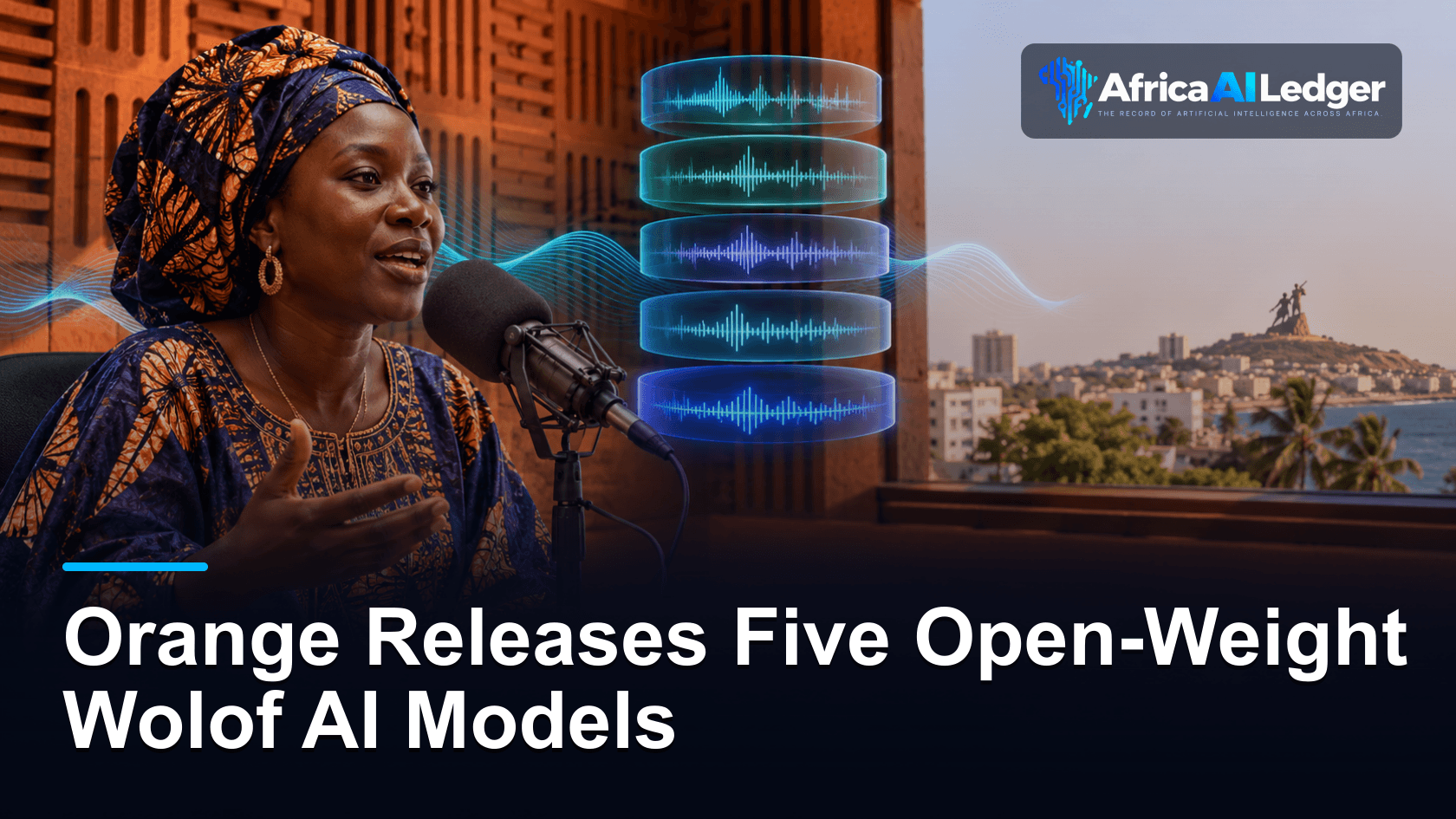
Background generated in ChatGPT; Africa AI Ledger editorial template
Orange has released five artificial-intelligence language models for Wolof, giving researchers and developers new tools for a language spoken by millions of people in Senegal and neighbouring countries but still poorly served by mainstream AI systems.
The models are available through Hugging Face under terms that permit free non-commercial use. Orange's announcement describes the release as part of a wider effort to improve digital inclusion and says the company has joined a coalition of more than 60 organisations working on African-language AI.
Related technical material places the models across a range from roughly 0.6 billion to 14 billion parameters. That range can support different uses and hardware constraints, from research experiments to more capable systems requiring greater computing resources.
The release addresses a real imbalance. Many large language models perform best in languages with abundant digitised text, commercial demand and established evaluation datasets. Wolof users may encounter weak translation, unnatural wording or systems that default to French. Better base models can support education, public information, media, customer service and accessibility.
“Open-weight” should not be confused with fully open-source. Developers can inspect and run the released model weights, but the non-commercial restriction limits how the systems may be used in paid products. A genuinely open ecosystem also depends on transparent training information, reusable data, evaluation methods and licensing that supports local businesses as well as research.
The quality of the underlying data is central. Wolof appears in several writing practices and is frequently mixed with French or other local languages. A model can score well on a narrow benchmark while struggling with everyday speech, regional variation or specialised public-service language. Independent testing should cover those conditions.
Community participation matters too. Language resources are not merely raw material. Speakers, writers, broadcasters and educators should help decide which uses are valuable, which forms of speech are represented and how offensive or sensitive material is handled. The benefits should extend beyond the company collecting and processing the data.
Smaller models may be particularly useful where cloud access is expensive or unreliable. They can be adapted for local tasks and potentially run on more modest infrastructure. Developers still need clear information about memory requirements, energy use, inference cost and accuracy before choosing a model for deployment.
Orange should publish detailed model cards covering datasets, limitations, safety tests and known performance gaps. It should also explain how commercial users can obtain permission and whether African startups, public institutions or non-profits receive different terms. Unclear licensing can discourage the very adoption the release is intended to support.
The five Wolof models are a meaningful contribution because they provide a practical starting point rather than another promise to include African languages later. Their long-term value will depend on independent evaluation, community governance and whether developers can build sustainable services around them.
African-language AI will not be solved by a single release. It requires maintained datasets, capable local institutions and models that reflect how people actually communicate. Orange has expanded the available foundation; the next task is to ensure the ecosystem around it remains accessible and accountable.
Source: Orange.
Source & attribution
Source: newsroom.orange.com