Education & Skills·Ivory Coast
Yango Fellowship Brings 24 Young African Innovators Together in Abidjan
22 Sep · Africa AI Ledger Desk
Africa AI Ledger · Analysis
Ghana’s TVET Service, UNESCO, KPMG and Microsoft are combining training, infrastructure and policy support to bring AI capability into technical education.
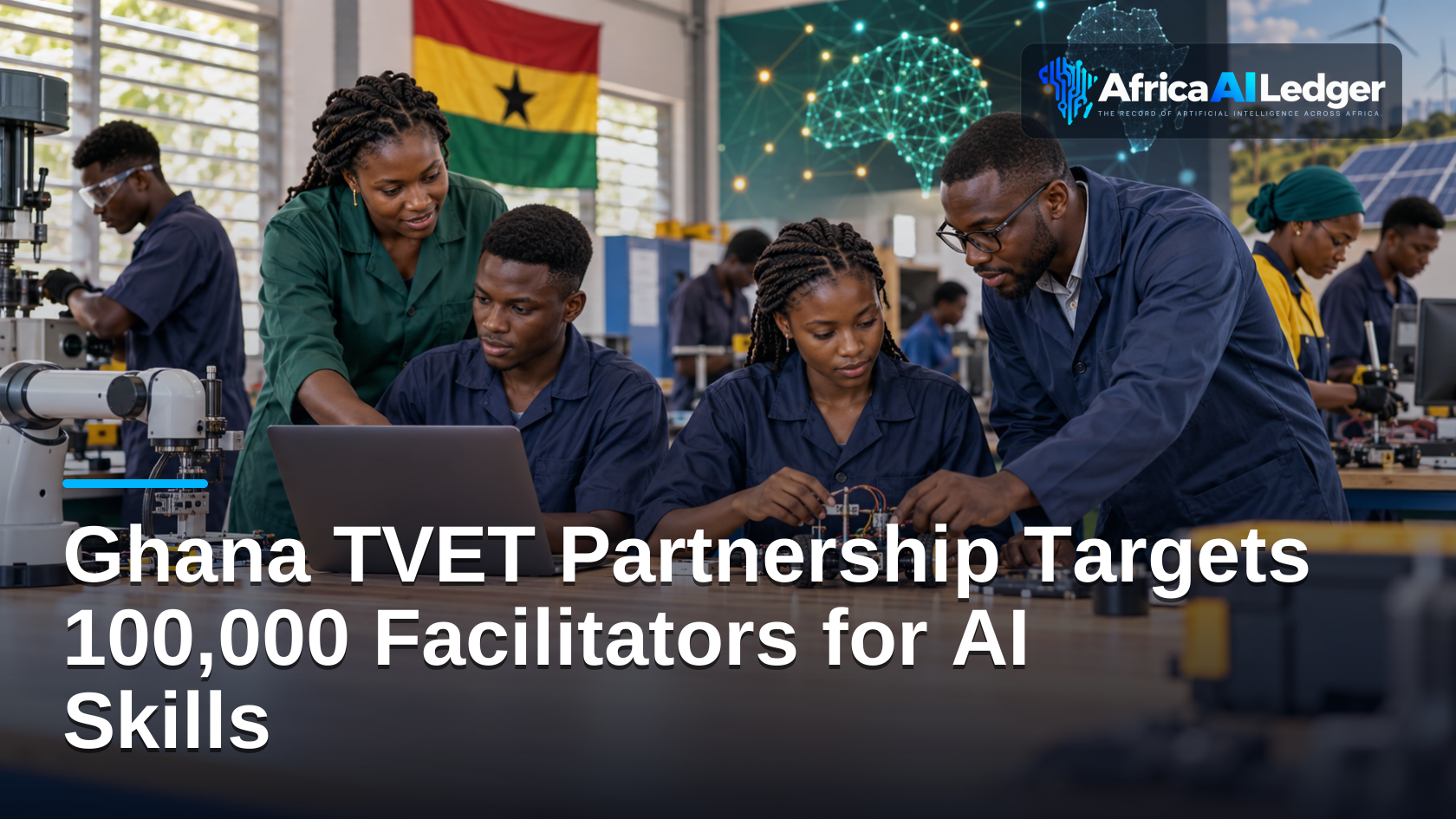
Africa AI Ledger visual template; background generated in ChatGPT
Ghana is putting technical and vocational education at the centre of its AI skills strategy through a partnership that aims to train at least 100,000 facilitators in artificial intelligence and digital competencies.
The agreement brings together Ghana’s TVET Service, UNESCO, KPMG and Microsoft under the AI EmpowerED initiative. According to GBC Ghana, the partnership was signed at the Ghana TVET Service headquarters and is intended to strengthen the ability of technical institutions to prepare learners for a labour market being reshaped by automation and intelligent systems.
The choice of facilitators as the starting point is deliberate. Training more learners without strengthening the people who teach them can produce scale without depth. In workshops and laboratories, instructors need to understand not only how to use new digital tools, but also how to question their outputs, protect learner data and identify bias.
The partnership frames AI adoption as an institutional challenge rather than a software purchase. Ghana’s TVET Service is expected to lead implementation, support institutional readiness and embed AI-enabled teaching and learning approaches. UNESCO will provide policy leadership and technical oversight, while KPMG will support programme design and systems strengthening. Microsoft will contribute digital infrastructure and AI-enabled tools.
That division of responsibilities is important because education systems often struggle when technology arrives without a delivery model. A national programme needs curriculum development, instructor preparation, reliable infrastructure and ways to measure whether training changes classroom practice. It also needs to reach institutions outside the most connected urban centres.
The initiative comes with a clear responsibility to address the risks that follow AI into education. Plagiarism, misinformation, algorithmic bias and poor handling of student data can undermine trust if educators are not equipped to manage them. The programme’s emphasis on responsible use gives the skills effort a governance dimension as well as a workforce dimension.
For Ghana, the potential payoff extends beyond classrooms. Better-prepared TVET institutions can help connect young people to industrialisation, entrepreneurship and technical work that increasingly depends on digital systems. But the target will be meaningful only if the programme can sustain training quality as it expands and demonstrate how many facilitators and learners are applying the skills in practice.
The partnership offers a useful model for other African countries: build AI capacity through the institutions that already deliver workforce training, while making ethics, data protection and practical relevance part of the curriculum from the start.
Source: GBC Ghana.
Source & attribution
Source: gbcghanaonline.com