Education & Skills
AfDB Partners Launch Free AI Training For African Public Officials
28 Sep · Africa AI Ledger Desk
Africa AI Ledger · News
The low-data and offline-ready platform brings more than fifteen Google training programmes together and targets three million African learners by 2030.
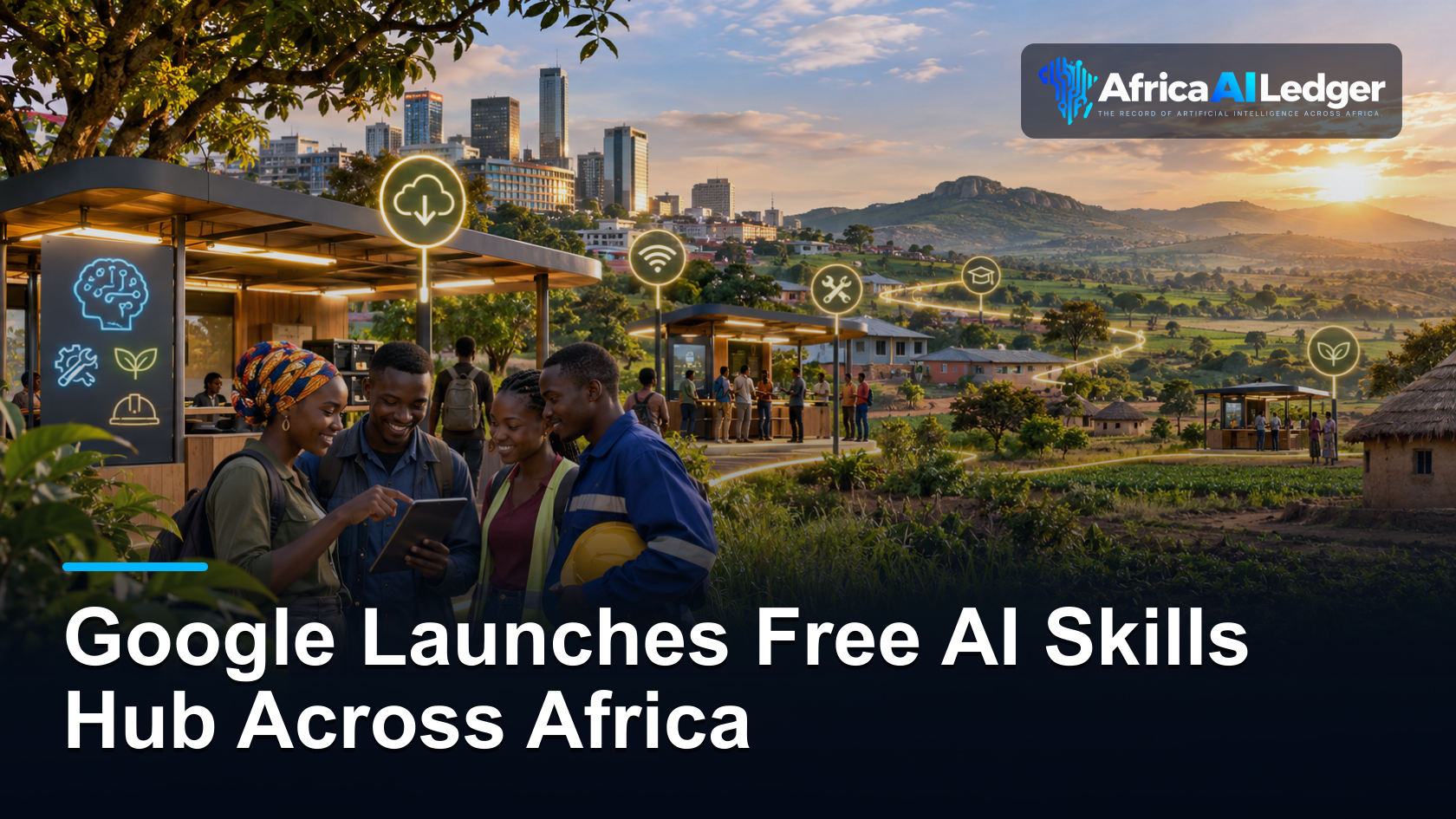
Background generated in ChatGPT; Africa AI Ledger editorial template
Google has launched a free learning platform that brings more than fifteen of its digital, cloud, business and artificial-intelligence training programmes into one hub for African users.
Skilling Africa with Google launched on 2 November with a target of equipping three million people by 2030. The platform includes Google Career Certificates, Hustle Academy and Google Cloud Skills, with material organised into shorter modules for students, entrepreneurs, developers and people entering digital work.
Its most relevant design choice is not the number of courses. Google says lessons can be downloaded over Wi-Fi and completed offline, while the mobile site is optimised for low-bandwidth connections and entry-level devices. These features respond to a common weakness in online training: programmes are technically open but costly or unreliable for learners with limited data.
The hub also includes SCOUT, an AI-powered study companion intended to answer questions, recommend next steps and adjust study schedules. Gamified skill trees, streaks and badges are designed to encourage completion.
Three million learners is an ambition, not an outcome. The platform should report active learners, completion, assessment results and progression into employment or business use. Registration totals alone would say little about whether the material improves capability.
Training quality must also be judged by depth. Short modules can introduce concepts and help users discover a field. They cannot replace sustained practice in software engineering, data analysis, cybersecurity or cloud operations. Learners need projects, feedback and opportunities to work with real organisational problems.
SCOUT creates another evaluation question. A study companion may make remote learning more responsive, but it can also provide confident answers that are incomplete or wrong. The platform should show how its guidance is checked, when it directs users to human support and whether it performs consistently across the languages and educational backgrounds of African learners.
The hub consolidates existing programmes rather than creating every course from the beginning. That can reduce fragmentation: a learner should not have to search across several corporate sites to understand which path follows from an introductory certificate. Clear prerequisites and progression routes will determine whether consolidation produces a coherent learning journey.
Local relevance remains important. Generic global material may teach a technical tool without addressing intermittent connectivity, public-sector procurement, informal business records or the language conditions in which African systems operate. Partnerships with universities, training organisations and employers could add local projects and mentorship.
Google says it has previously provided foundational digital training to more than seven million young Africans. The new platform should build on that reach by publishing evidence about what learners did afterwards and which groups remain excluded.
Skilling Africa is a useful infrastructure layer for accessible learning, especially if offline delivery works as promised. Its real contribution will be measured not by a headline enrolment target but by sustained completion, practical competence and whether learners can translate certificates into better work, stronger businesses or locally useful technology.
Source: Google Africa.
Source & attribution
Source: blog.google