AI Infrastructure·Nigeria
Digital Parks Africa Plans Lagos Data Centre As Nigeria Demand Grows
20 Sep · Africa AI Ledger Desk
Africa AI Ledger · News
The company says it will expand high-performance computing and open-lab resources by the end of 2026, although capacity, location and investment details have not been disclosed.
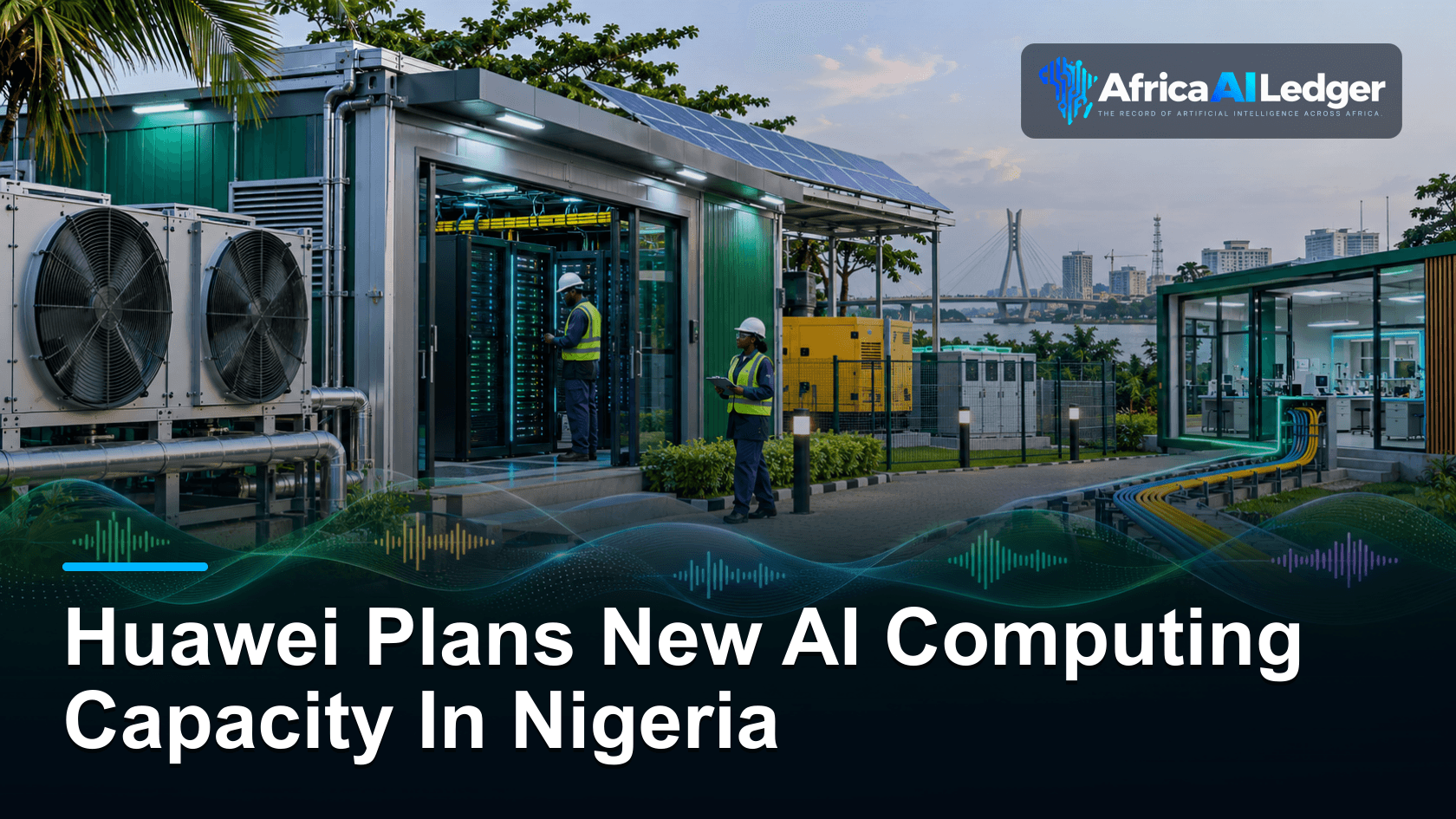
Background generated in ChatGPT; Africa AI Ledger editorial template
Huawei plans to expand artificial-intelligence computing infrastructure in Nigeria by the end of 2026, adding high-performance resources and an open-laboratory environment intended to support local organisations and developers.
The plan was outlined at a company event on 18 November and reported by ITWeb Africa. Huawei also demonstrated products including Stashio, an Attentive multilingual voice agent and Seamfix identity technology as examples of applications using AI infrastructure.
No primary company release was located during Africa AI Ledger's review. The available report does not disclose the investment amount, computing capacity, exact locations, customer-access terms or a detailed timetable beyond the end-of-year target. The announcement should therefore be treated as a planned expansion rather than completed national capacity.
Nigeria needs more accessible computing infrastructure. Local startups, universities and public agencies often rely on international cloud regions, limited research clusters or costly hardware. Greater domestic capacity can reduce latency, support sensitive workloads and give technical teams better access to systems needed for training and inference.
Capacity alone is not enough. Users need predictable prices, power reliability, technical support and clear rules for moving data or workloads. A facility described as open should publish who qualifies, how resources are allocated, whether competing cloud tools are permitted and what happens when demand exceeds supply.
Energy efficiency is particularly important in Nigeria, where electricity constraints can make large computing systems expensive and difficult to operate. Huawei has emphasised efficiency, but meaningful assessment requires figures such as power usage effectiveness, energy source, expected load and the cost of backup generation. Efficiency claims should be measured under local operating conditions.
The demonstrated voice and identity products also raise governance questions. Multilingual agents need testing across Nigerian languages and accents, including cases where a system is uncertain. Identity technology can improve access and reduce fraud, but errors may exclude people from essential services. Deployers need human review and a clear correction process.
Huawei's role in the underlying infrastructure makes transparency important. Customers should understand where data are processed, who can administer systems, which cyber-security standards apply and how legal requests are handled. Public-sector buyers should retain audit rights and avoid contracts that make later migration impractical.
An open lab could help developers test applications before committing to commercial infrastructure. Its value will depend on sustained access rather than occasional demonstrations. Universities and independent researchers should be able to participate, and training should develop the ability to evaluate and maintain systems rather than only use Huawei products.
Nigeria also needs a diverse infrastructure market. Capacity from one large supplier can help, but resilience improves when organisations have interoperable choices across providers. Open standards, portable workloads and transparent procurement should accompany the expansion.
Huawei's announcement points toward additional local computing resources at a time of strong demand. The next evidence should be concrete: commissioned capacity, access conditions, energy performance, customers served and applications operating reliably. Until then, it remains a promising company plan with important details unresolved.
Source: ITWeb Africa.
Source & attribution
Source: itweb.africa